

After cataract surgery, you are likely looking forward to clearer vision and getting back into a routine. Our team at Heartland Eye Consultants knows that being able to drive yourself again is important, which is why we want to support you in getting behind the wheel safely.
The timeline for driving depends entirely on your personal healing process and your eye doctor’s evaluation. Most people receive clearance to drive within a few days to a week after their procedure, once their vision is stable and meets local legal requirements.
Your Eye Doctor’s Approval
An important part of getting back behind the wheel is your eye doctor’s go-ahead. Your follow-up appointment is usually the day after your procedure, when our team can check your vision and assess your healing. This post-op check helps determine when you are legally and safely able to drive.
What Your Eye Doctor Checks
At your follow-up, our team will look at a few specific things to assess your readiness to drive. We want to see that your eyes are healing as expected without any issues, so we may look for:
- Your visual acuity, or how clearly you can see an eye chart.
- The pressure inside your eye.
- Signs of proper healing without complications.
Key Vision Milestones for a Safe Drive
Before you can drive, your vision needs to meet certain standards. It’s not just about seeing clearly: It’s about feeling secure and comfortable on the road. The experienced eye doctors in Omaha can help you understand these milestones.
Clear Vision at Near and Far Distances
Your ability to focus on the road, read signs, and see your dashboard without blurriness is key. Your eyes may still be adjusting in the first few days, so making sure your vision is stable is one of the important signs that you’re ready to return to driving.
Reduced Glare and Light Sensitivity
After surgery, you might notice halos around lights or feel more sensitive to bright light. These effects should lessen over time enough that they don’t impact your ability to drive safely, especially at night.
Comfortable Depth Perception
Judging the distance between your car and other objects is a key part of driving, and your brain needs a little time to adapt to your new lens.
A General Timeline for a Return to the Road
While everyone heals differently, there is a typical timeframe for when you can expect to drive again. Your personal recovery speed and the specifics of your procedure (which addresses the clouding of the eye’s lens) can influence this timeline. It’s a process unique to you.
The First 24 to 48 Hours
You should not plan to drive for at least 24 hours after surgery. Plan to have a friend or family member drive you home from the procedure. You also need a ride to your first follow-up appointment.
Beyond the First Few Days
Many people are cleared to drive within a few days, as long as their vision is stable and they feel comfortable behind the wheel. Others may need a week or more for their vision to settle. It’s important to wait for your eye doctor’s approval.
Tips for Your First Drive After Surgery
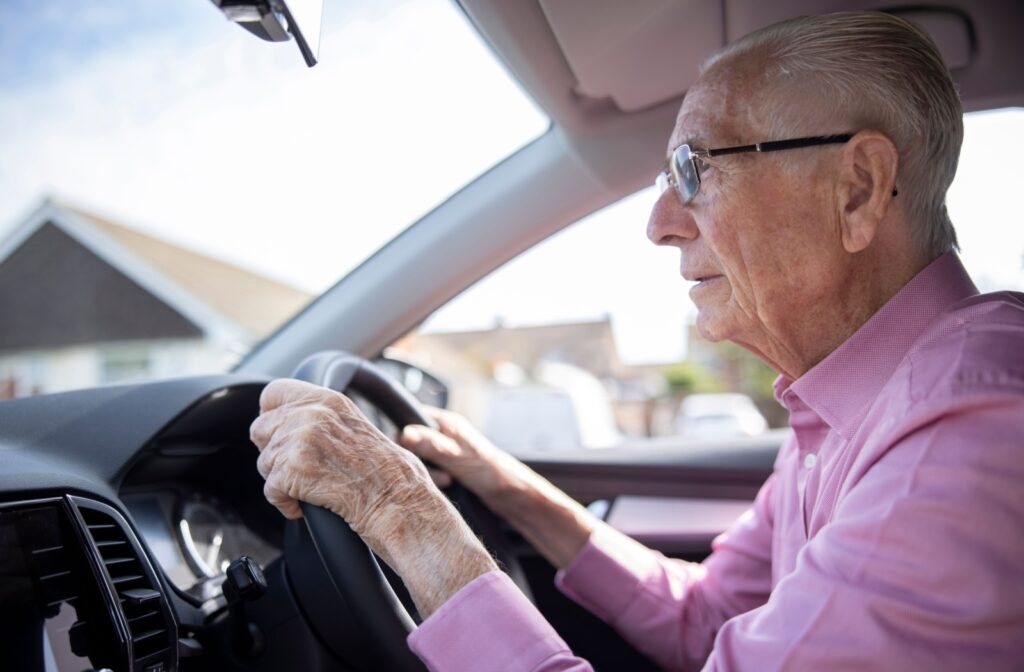
When you get clearance to drive, it’s smart to ease back into it. Your comfort and safety are the top priorities. These simple steps can help you feel more secure for your first trip and become comfortable on the road again.
- Start with short and familiar routes: A quick trip to a nearby store on roads you know well is a great way to start.
- Drive during the day: Daytime driving avoids the glare from headlights and streetlights.
- Wear your sunglasses: Our team can provide protective sunglasses. Wearing them helps reduce brightness and protects your healing eyes from the sun’s damaging UV rays.
- Listen to your body: If you feel any eye strain, discomfort, or uncertainty, pull over when it is safe to do so. It’s okay to take your time.
Other Activities to Limit During Recovery
Driving isn’t the only activity you’ll need to be mindful of after your procedure. To support a smooth recovery, it’s helpful to avoid certain actions that could strain your eyes.
Avoid Strenuous Activity and Bending
For the first week, avoid lifting anything heavy, like a full grocery bag or your luggage. You should also try not to bend over at the waist. This simple change helps manage the pressure in your eye as it heals.
Give Your Eyes a Break From Screens
You can watch TV or use a computer in short periods, but your eyes may feel tired or dry, leading to symptoms of eye strain. Try to limit screen time for the first few days. Using lubricating eye drops as prescribed by your eye doctor can also help with comfort.
Keep Water and Debris Out of Your Eye
You need to protect your eyes from soap and water when you shower. It’s also important to avoid dusty areas, swimming pools, and hot tubs. This helps prevent irritation or infection while your eyes heal.
Schedule Your Cataract Surgery Consultation
Getting back to driving after cataract surgery is a major milestone in your recovery, and patience during healing is an important factor that will help you return to the road safely. If you have questions about cataract surgery or your recovery, our team at Heartland Eye Consultants is here to help. Schedule a consultation and learn more about your path to clearer vision.