
Key Takeaways
- Blurry vision with glasses can come from an outdated prescription or an eye condition.
- Higher-order aberrations are tiny, uneven flaws in how your eye focuses light.
- Glasses correct focus in up to two directions, so some blur can remain with a fresh prescription.
- Dry eye disease, cataracts, glaucoma, and keratoconus can also blur your vision.
- Modern measurement tools like Ovitz Xwave can give our team a detailed look at how your eyes focus.
You pick up your new glasses and slide them on, yet the street signs still look soft around the edges. Reading a menu in a dim restaurant takes more squinting than it should. Our team at Heartland Eye Consultants hears this story often, and lingering blur like this deserves a closer look.
Your vision can stay blurry with glasses because your prescription may need an update, or because an eye condition or tiny focusing flaws need more than glasses can offer. A comprehensive eye exam with our team can help sort out which one applies to you and whether new glasses or other options fit your eyes.
Why Is Your Vision Still Blurry with Glasses?
Your eyes can shift over time, and a prescription from a few years back may no longer match how you see today. A quick update often brings things back into focus.
Sometimes, however, a new prescription doesn’t clear things up, because some eye conditions need more than glasses to manage.
How Age Can Affect Your Vision
Age-related eye changes often play a role in lasting blur. As the years go by, the parts of your eye that focus light can change.
Younger people can notice lasting blur too. A college student squinting at a lecture slide deserves answers just as much as a grandparent reading a recipe card.
What Are Higher-Order Aberrations?
Nearsightedness, farsightedness, and astigmatism are the focus problems glasses are designed to correct. Higher-order aberrations are different. They’re tiny, uneven flaws in how your eye focuses.
Picture looking through a window with small ripples in the glass. You can see the yard outside, but the edges of the fence and trees look a little smeared. At night, you might notice halos or starbursts around headlights.
Why Glasses May Not Fully Correct Them
Glasses correct focus in up to two directions. Higher-order aberrations come from tiny irregularities in your cornea, the clear front of your eye, or in your lens, which bend light in many directions at once.
Therefore, some blur can remain even with a fresh prescription. You might read the eye chart well during your visit and still feel your vision isn’t crisp when you drive home.
Other Eye Conditions That Can Blur Your Vision
Higher-order aberrations aren’t the only reason blur can stick around. Several eye conditions can also affect how clearly you see.
Dry Eye Disease
With dry eye disease, your eyes may feel gritty or burning along with blurry vision. You might notice the blur comes and goes as you blink. Eye drops may bring relief.

Cataracts and Glaucoma
Cataracts are cloudy areas in your eye’s natural lens. Glaucoma damages the optic nerve and is often linked to pressure inside the eye.
Family history can raise your glaucoma risk. If a parent or sibling has glaucoma, let our team know at your visit.
Keratoconus
With keratoconus, the front of the eye thins into a cone shape, and special rigid contact lenses may help you see more clearly.
How Modern Technology May Help
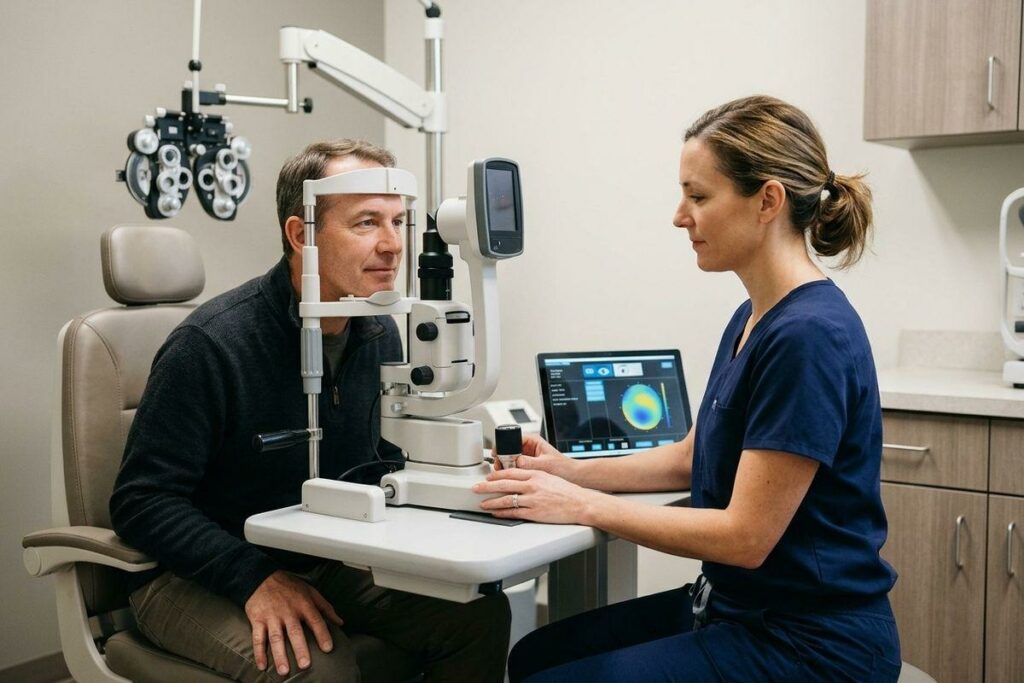
A standard eye chart tells our team how well you can see letters at various distances. Ovitz Xwave goes a step further by mapping how light travels through your eyes.
This kind of measurement may reveal small flaws glasses don’t correct, such as higher-order aberrations. With that information, our team can plan personalized vision care built around your eyes, not just a number on a prescription.
When to See Eye Doctors for Blurry Vision
Reach out to eye doctors in Omaha if you notice any of these changes:
- Your blur stays even when you wear your glasses.
- Your vision changes suddenly.
- You have trouble seeing clearly at night.
- New symptoms appear, or your blur worsens.
Why Prompt Care Matters
Blurry vision can make daily tasks feel unsafe. Merging onto the interstate, walking down stairs at night, or reading the label on a medicine bottle all depend on clear sight.
Early care may help keep blur from worsening.
See Life Clearly
You don’t have to settle for a world that looks a little fuzzy. Heartland Eye Consultants takes the time to learn how your eyes work and uses modern tools like Ovitz Xwave to look for answers your glasses can’t give. Book an appointment with our team today and take the next step toward clearer, more comfortable vision.